Digestion refers to the breakdown of large molecules of food into simple and absorbable form for use by the animals with the aid of enzymes. It is the process of breaking down food into substances the body can use for energy, tissue growth, and repair. This digestion or catabolism is divided into two types – the mechanical digestion of food that occurs in the mouth when it is physically broken up into smaller pieces and the chemical digestion that occurs in the gastrointestinal tract when the food is broken down into small molecules by digestive enzymes.
Alimentary canal of man: This is a tube of varying diameter that runs from the mouth to the anus. It has sections which are adapted to deal with various stages of nutrition such as;
- Ingestion: This process involves taking foods and liquids into the mouth (eating). It is when an organism consumes a substance. In the case of human beings, when the food is taken in from the mouth and then masticated and swallowed for further processing, it is called ingestion. It takes place by absorbing substances by cell membranes in single-celled organisms.
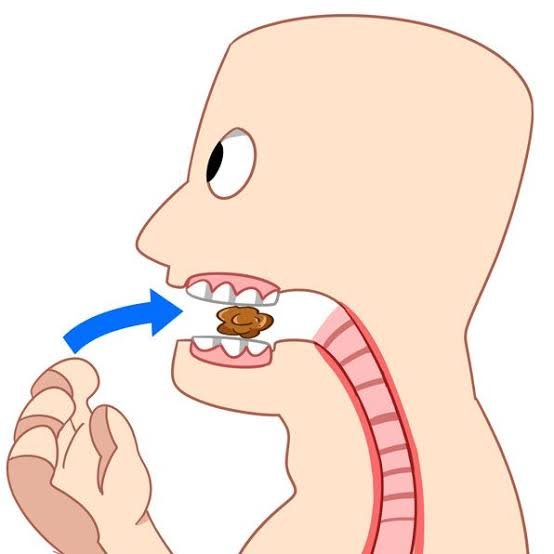
- Secretion: Cells within the walls of the GI tract and accessory digestive organs secrete about seven liters of water, acid, buffers, and enzymes into the tract which help in digestion of food. Gastric secretion is stimulated by the act of eating (cephalic phase) and the arrival of food in the stomach (gastric phase). Arrival of the food in the intestine also controls gastric secretion (intestinal phase). The secreted fluid contains hydrochloric acid, pepsinogen, intrinsic factor, bicarbonate, and mucus
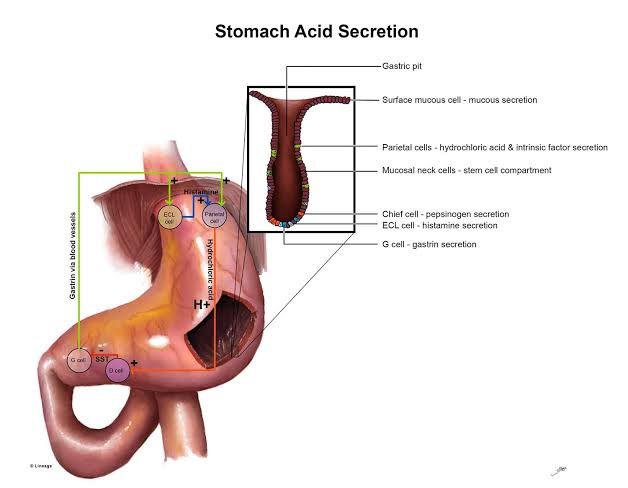
- Mixing and propulsion: Alternating contractions and relaxations of smooth muscle in the walls of the GI tract mix food and secretions and propel them toward the anus. This capability of the GI tract to mix and move material along its length is called motility. Mixing movements occur in the stomach as a result of smooth muscle contraction. These repetitive contractions usually occur in small segments of the digestive tract and mix the food particles with enzymes and other fluids. The movements that propel the food particles through the digestive tract are called peristalsis.
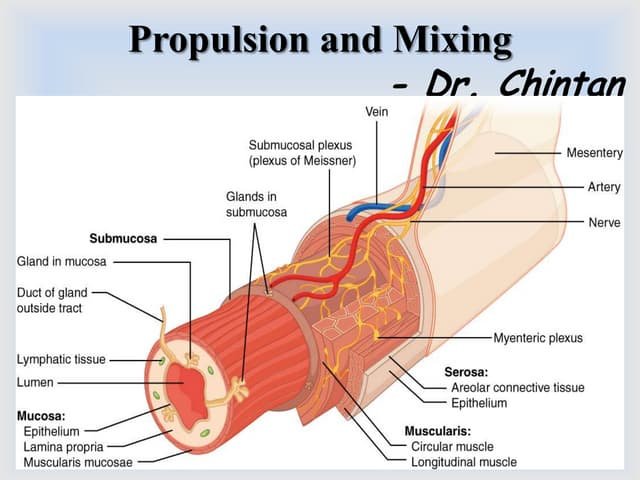
- Digestion: Digestion is of two types- Mechanical and Chemical digestion. In mechanical digestion the teeth cut and grind food into smaller pieces. Then smooth muscles of the stomach and small intestine break it into further small pieces and mix it thoroughly with digestive enzymes. In chemical digestion the large carbohydrate, lipid, protein, and nucleic acid molecules in food are split into smaller molecules by hydrolysis and digestive enzymes. Vitamins, ions, cholesterol and water can be absorbed without chemical digestion.
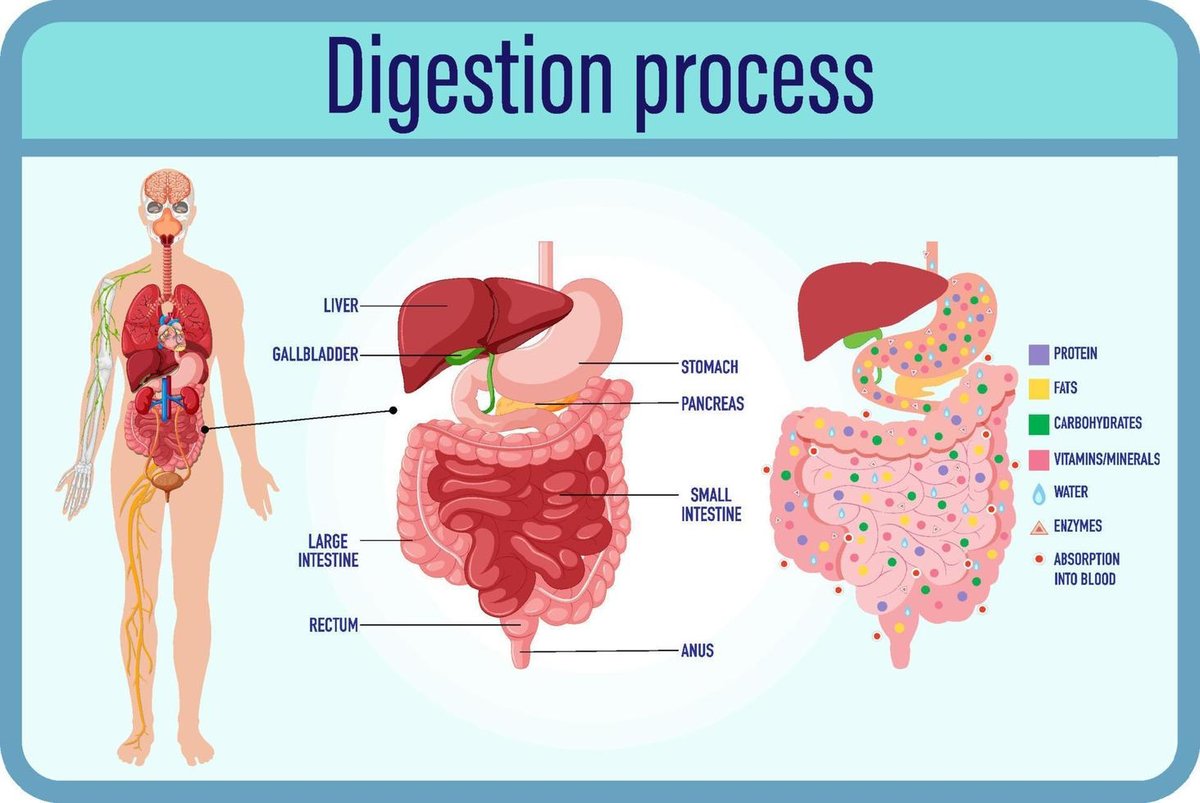
- Absorption: Absorption is the process by which the products of digestion are absorbed by the blood to be supplied to the rest of the body. The entrance of ingested and secreted fluids, ions, and the products of digestion into the epithelial cells lining the lumen of the GI tract is called absorption. The absorbed substances pass into blood or lymph and circulate to cells throughout the body.
During absorption, the digested products are transported into the blood or lymph through the mucous membrane. Absorption is achieved by the following mechanisms:
- Simple diffusion.
- Active transport
- Facilitated transport.
- Passive transport.
- Simple diffusion: Simple diffusion is defined as the movement of solute from the higher concentration to the lower concentration through the membrane. After digestion, a few monosaccharide diffuse into the blood based on the concentration gradient. Example: Glucose, amino acids and ions like chloride.
- Active transport: Active transport may be defined as the process of solute movement from the lower concentration to the higher concentration by the expense of energy. Electrolytes like Na ions are absorbed by active transport into the blood.
- Facilitated transport: Facilitated transport is defined as the process of movement of solutes across the biological membrane with the help of specific carrier proteins. Some digested amino acids and glucose are absorbed into the blood by this method.
- Passive transport: Passive transport is defined as the process of solute movement across a cell membrane without a requirement of energy. After digestion, simpler food substance is absorbed into the blood by passive transport. Some digested products from fats cannot be absorbed into the blood. Example: Fatty acids and glycerol. These components attach to micelles which are small droplets and form the micelle-component complex. This micelle – component complexes are re-formed into Chylomicrons. Chylomicrons are a small protein coated fat globules. Then, Chylomicrons move into the lymph vessels and release the digested products into the blood. Finally, the digested and absorbed products reach the tissue to be utilized for their activities. This process is called as assimilation.
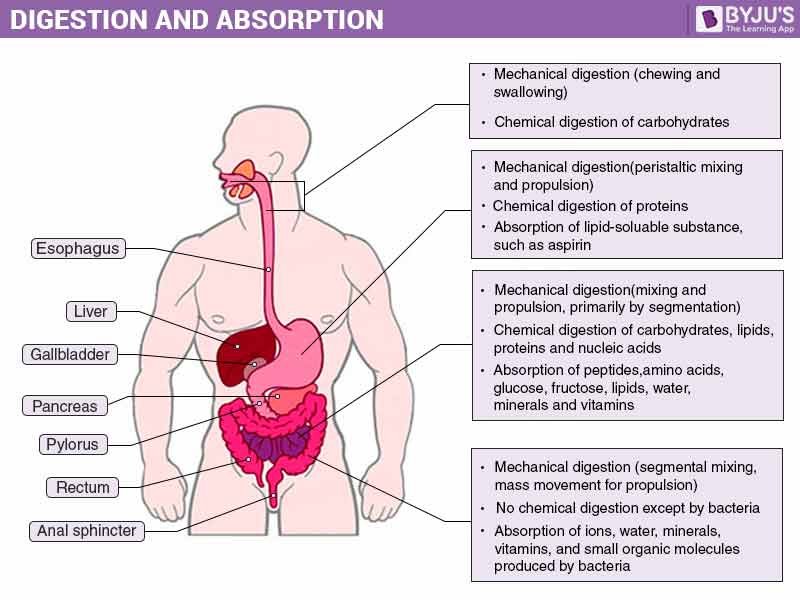
- Defecation: Wastes, indigestible substances, bacteria, cells sloughed from the lining of the GI (gastro intestinal) tract, and digested materials that were not absorbed in their journey through the digestive tract leave the body through the anus in a process.
Animals have different types of alimentary tracts which vary in size, complexity, mode of feeding or the type of diet. The nature of alimentary tracts has some evolutionary trend as the complexity tends to increase from simple unicellular animals like protozoa to complex multicellular animals like mammals.