Key concepts or terms in timber processing are the processes involved in timber processing and they include:
- Growth
- Felling
- Processing
- Conversion and
- Seasoning.
Growth of a Tree
Timber growth is the process of planting and nurturing seedlings, until they grow into tress, with roots, trunks, branches, leaves, and barks.
In natural forests, trees grow wild. In plantations, they are planted and cared for until they are ready to be felled (cut down). Harvesting of trees from natural forests must be controlled. Illegal felling is causing scarce and valuable hardwood trees to become fewer with each passing week. Tropical hardwood trees take more than 40 years to reach maturity. Softwood can be ready for felling after 10 years.
Every single tree plant must grow as a standing timber in two ways:
- Vertical Growth: A tree grows vertically downward through the root and shoots and upward through the stem, branches and leaves. The root draws water and mineral salts from the earth, which is then transported to other parts of the tree.
- Horizontal Growth: This is the process where the cambium layer produces new layers of cells annually as the tree hardens outwardly to form the bark. This growth increases the diameter of the tree to become the trunk. Timber is obtained from the trunk.
Felling of Trees
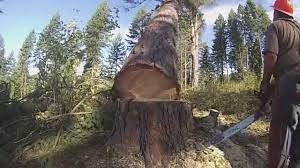
Wood felling is the process of cutting down trees in the forest either manually or mechanically. A felled tree is referred to as log, and the person cutting the trees is called a feller.
In hand felling, an axe, saw or chainsaw is used to fell a tree, as shown in the diagram here.
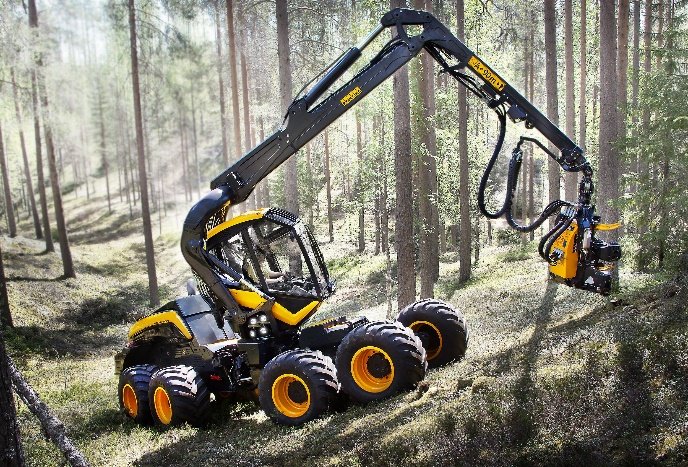
A machine used for felling trees is a feller buncher, which is capable of rapidly cutting and gathering several trees. The business of cutting timber in a forest and preparing it for the market is called lumbering.
Processing of Timber
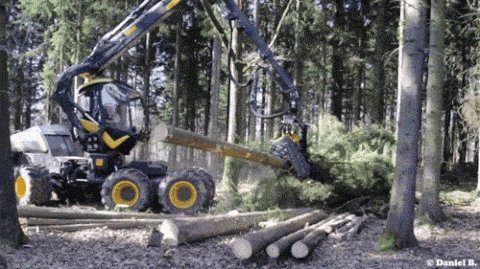
After felling, the branches of the trees are removed. The clean trunk is then crosscut to suitable log lengths. The logs are loaded up and taken to a sawmill, where the processing of the wood starts. Before wood can be converted or seasoned, it must first be processed.
Wood processing describes the different procedures used to create raw materials from wood. These raw materials are then used to make a variety of wood-based goods. Many of these processes involve chemicals and other materials, which are added to get raw wood ready for use. Examples of wood processing include the production of timber for use in construction, wood pulping, wood chipping, and the production of prefabricated wood. 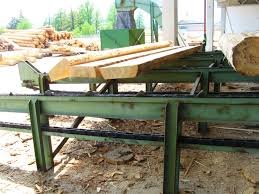
With wood pulping, the wood is treated so that the cellulose content of the wood can be used to produce paper products. Wood chips and sawdust are combined with special glues and chemicals to produce pressboard. Wood processing also produces planks used in building projects, or for wooden fencing and poles. Wood processing equipment includes saws, chippers, and hoppers (a kind of container for wood chips or sawdust).