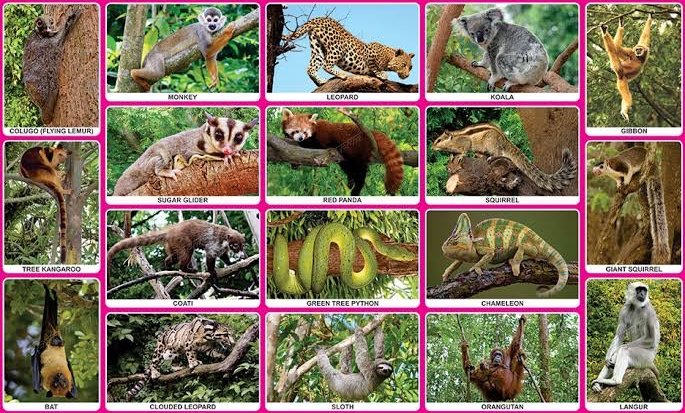
- There are basically three types of habitat. They are
- Aquatic habitat
- Terrestrial habitat and
- Arboreal habitat
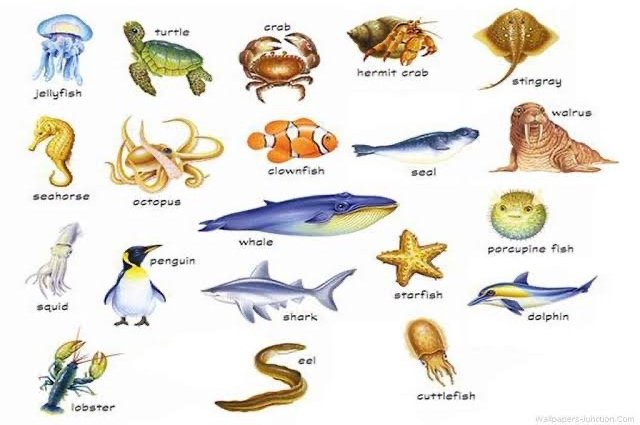
- 1. Aquatic (Water) Habitat: This habitat refers to water environment. Organisms found in this habitat are called aquatic organisms. There are three types of aquatic habitat:
- (a) Fresh water habitat: This is further divided into lotic (running water of rivers, spring, streams, etc.) and lentic (stagnant water of lakes, ponds, swamps, dams, etc.). Examples of animals that live here are tilapia fish, crabs, frogs, crocodile etc.
- (b) Marine habitat: These are made of oceans, and seas with salt (salinity). Examples of animals in this habitat are whales, octopus, dolphins, weeds etc.
- (c) Estuarine habitat: This refers to the river mouths where salt and fresh water meet. Examples of such areas are bays and lagoons. The organisms found here are periwinkles and lobsters, etc.
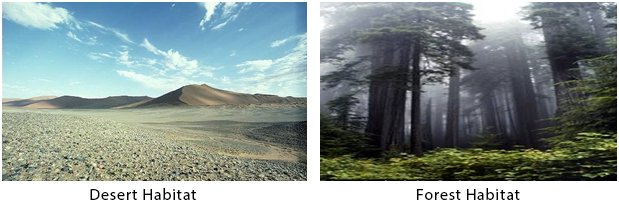
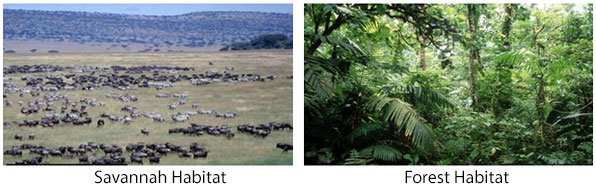
- 2. Terrestrial (Land) Habitat: This habitat refers to land environment. Living organisms found living in terrestrial habitat include human beings, domestic animals, wild animals and plants. The nature of a terrestrial habitat depends on the climatic condition of that environment. Examples of habitats here are desert, forest and savanna habitats.
- 3. Arboreal/Air Habitat (in or on trees): This is a habitat above ground level where certain organisms are able to live and feed. The name arboreal comes from a Latin word which means ‘tree’. Examples of arboreal habitats are holes within a tree, top of trees, leaves and branches of trees. Living organisms found living in arboreal habitat include birds, monkeys, tree snails, squirrels, some plants that creep on branches of taller trees (epiphytes), and a variety of insects.