Biology has found great applications in many areas of human life, some of which include:
- Medicine: Production of drugs and vaccines for preventing and curing many diseases e.g. penicillin, organ transplant e.g. kidney (renal) transplant, in-vitro fertilization in infertile couples.
- Agriculture: Production of hybrid (crops and animals with desired qualities), use of biological pesticides to control agricultural pests.
- Bio-remediation i.e. use of naturally occurring bacteria to clean up oil spills and toxic chemicals.
- Biotechnology: Use of genetic engineering to fight genetic diseases.
- Food production: Production of single cell protein (SCP) to reduce protein deficiency problem, food storage and preservation

PROCESS OR METHOD OF SCIENCE
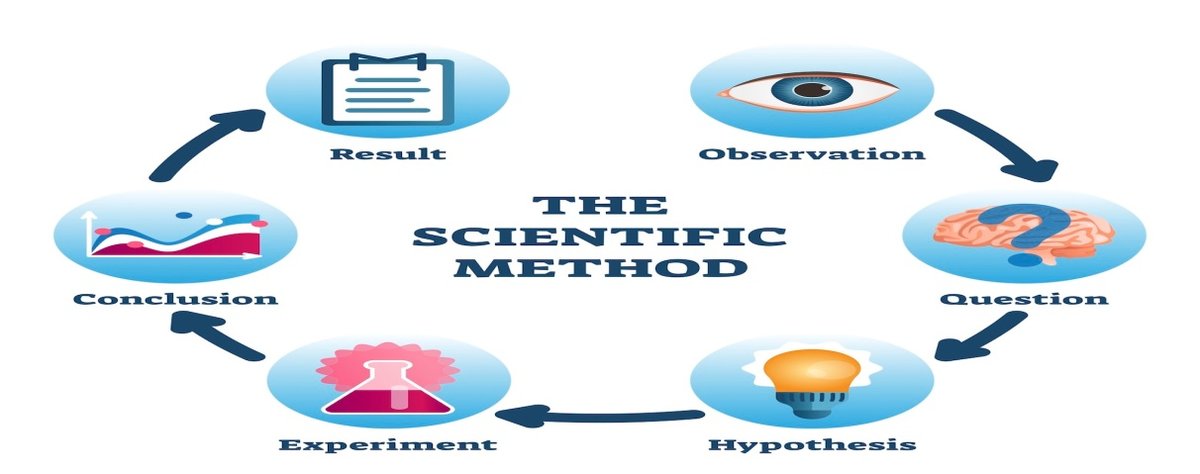
This is a systematic approach used to investigate enquiries arising from any observation made in nature. Therefore, the scientific method is the tool used to unravel the mysteries of life. The scientific methods include the following steps:
- Observation
- Classification
- Inference
- Measurement and Identification
- Hypothesis
- Experiment
- Control or Conclusion
- Theory or Law
The starting point of scientific method is observation which involves the use of the senses to describe what one has seen or felt about an object. The observation then leads to classification, then to inference (logical reasoning) and later to measurement and identification of the existing problem. This is followed by hypothesis which is a reasonable explanation for an observation made and which can be tested experimentally. A tested hypothesis may be accepted, rejected or modified to form a new hypothesis. A tested hypothesis that is found to be repeatedly true within the limits of available evidence becomes a theory. A theory is therefore an aggregate of many verified hypotheses. An extensively tested and proven theory becomes a law or principle which is still subject to change due to continual experimentation or research. To carry out a successful experiment (void of false conclusions), a parallel experiment called controlled experiment is usually set up. This is done by keeping constant all factors affecting the result of the main experiment and varying the factor being tested.
Experiments should be reported following a generally accepted pattern laid down by scientists. The pattern includes:
- Aim: the purpose of the experiment.
- Apparatus/ materials required.
- Method /procedure followed
- Observation made.
- Conclusion based on observation made and final result gotten.
Note: Precautions or care that should be taken against dangers/hazards can also feature during experimentation.